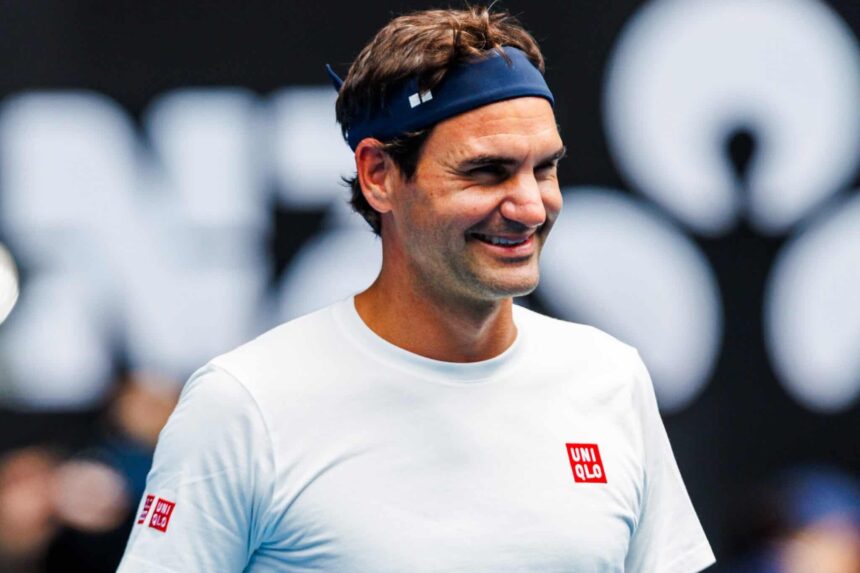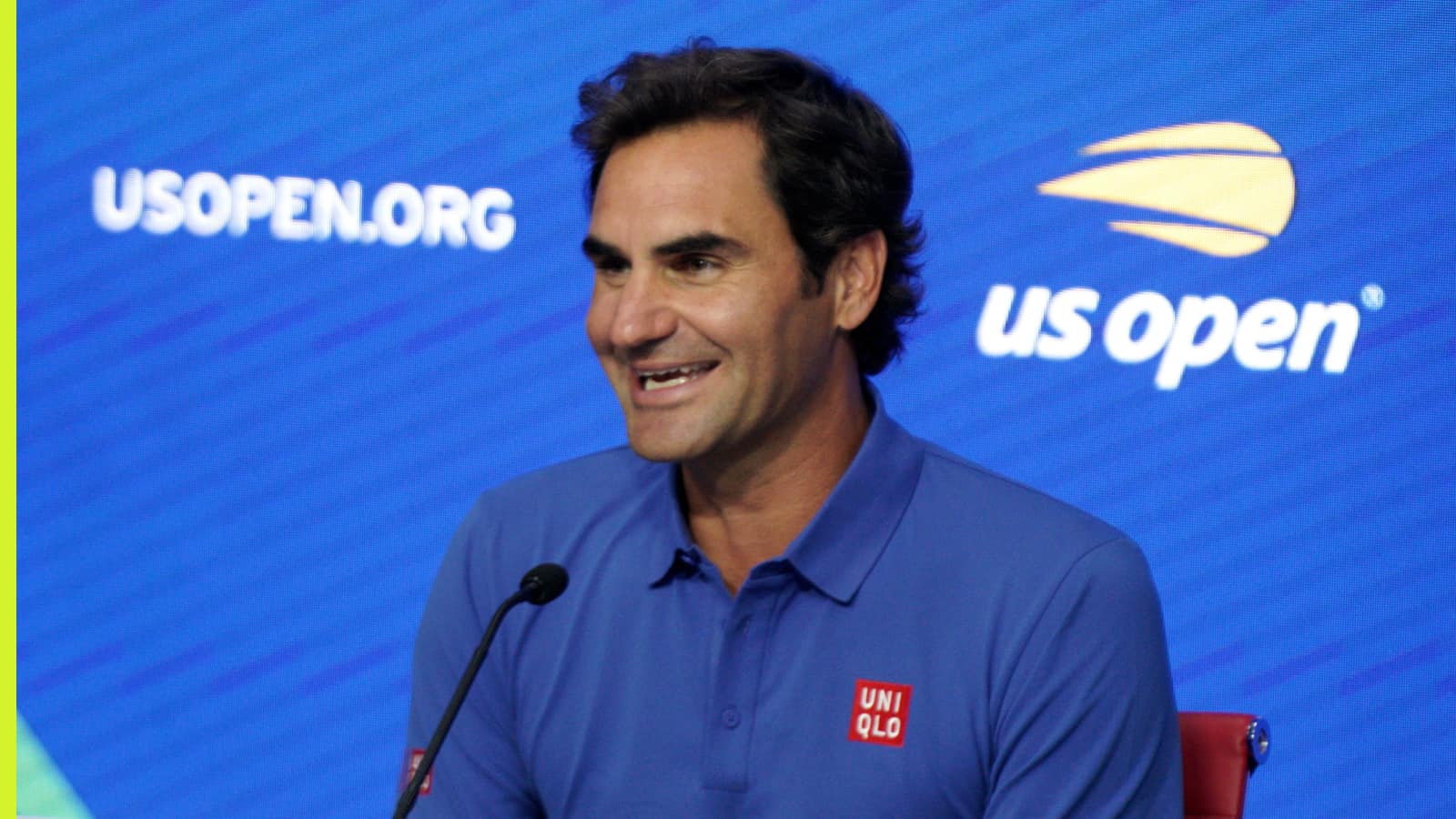
Roger Federer covered a range of topics as he spoke to the media ahead of his highly-anticipated exhibition match at the US Open.
The 20-time Grand Slam champion retired from tennis at the 2022 Laver Cup in London after partnering Rafael Nadal in doubles in his final match.
The Swiss icon’s last-ever singles match was a defeat to Hubert Hurkacz in the quarter-finals at Wimbledon in 2021.
On Tuesday, Federer will play a singles set against Andy Roddick on Arthur Ashe Stadium. He will then partner John McEnroe in an exhibition doubles match against Andre Agassi and Roddick.
Here is everything Federer said in a press conference ahead of his return to the court at Flushing Meadows.
Q. What is your greatest memory in this building?
FEDERER: I mean, now looking back, I guess it’s just the streak of the five in a row that I was able to string that together is kind of surreal because I always knew how hard it is to win here. Last major of the season, everybody is gunning for it. Everybody can play on hard courts and with the humidity, the wind, I guess also the changes over the years here, it’s just been a tough one. So, I think looking back, that’s incredible. My favourite one probably is the match overall with Agassi here. I don’t know, it just felt like it was going to be a special occasion for him. I was defending champion and that just kind of made it super cool. I think the year before we played in five sets and some crazy wins over two days against each other already. I loved the rivalry I had with Andre at the time, so playing him here in New York was extra special.
Q. I wonder, having gone through it all and done it all on your side, what are maybe a couple of key things that you did to have longevity in the sport? How were you able to deal with it all and what advice would you give these young guys who are in the middle of this battle now?
FEDERER: Every injury is different. Some are unfortunate, some are because maybe you just pushed a little too far and then you got hit with something or it’s an accumulation of a lot of things. I don’t know the seriousness and how it all came about. Obviously, the most unfortunate time to get hit with an injury is right before the French and then you kind of miss French, Wimby because that comes back to back. Then, obviously, it’s a struggle for the open and we’ve seen that with Carlos. Obviously, I always tried to keep a good schedule in terms of enough breaks. It’s easier said than done. I took a lot of chances as well where I piled on maybe a couple more tournaments than I should have, but kind of made it through the tournaments. I think it’s important also to prioritise what’s important to you. That could be American swing here or Australia for the Aussies. Everybody has different times of the year when you want to peak because you can’t peak, clearly, 20 times a year, but I think fans shouldn’t forget that as well. It’s hard to peak every single match. I think now that we see the two weeks in the Masters 1000s, that’s an interesting new dynamic, which I think the players are probably mentally and physically adjusting to with their fitness coaches and coaches in general.
I’m proud of the fact that I was able to play from January to November throughout and never really missed indoor season or Australia or any of the American swings. I kind of showed up everywhere, but obviously we were always very careful of what’s next. I never really wanted to make it all about the Slams, as well.
I remember Pistol (Pete Sampras) talked a lot about how it was Slams only for him towards the end of the career. I didn’t like the fact that that was going to be my case. I liked too many other tournaments and I loved the ATP tour. From that standpoint, I really tried to keep everything a priority, but obviously the body is number one, to be honest. And also the well-being mentally, because if you keep on playing all the time, you also get a bit worn out, obviously.
Q. What does it mean to you to be back here at the US Open and play in front of New York fans again?
FEDERER: It’s nerve-wracking, to be honest. I haven’t played a singles set in, I don’t know, is it Hurkacz [at] Wimbledon maybe? So it’s been five years. Don’t know how it’s going to go tomorrow, so there’s a lot of uncertainty, but a lot of happiness that I can return to Arthur Ashe, a place where I’ve had so many beautiful moments. And I don’t know, I just get a sort of a chance to be with Roddick and McEnroe and Andre, of course. But so it’s just nice to connect with the tennis community again. That’s why I try to go to four or five events throughout the season. But this one’s obviously special with the Icon Returns here in New York and then going to Newport, Rhode Island and going for the first time over there, actually.
And getting inducted right away is obviously super special, means a lot. Yeah, and it’s nice to look back, I guess, one more time, because, you know, life goes quick, especially when you have four children. You stop remembering what you did or what you’ve been through. So it’s like go like into a time machine and like everything slows down for a second and you can actually look back one more time because I don’t need it in my life, you know. But it’s nice when it does happen, because my life on tour was amazing.
I loved it. And now the kids are also getting older, so they can also maybe enjoy it a little bit, seeing their dad play, because the girls are 17 and the boys are 12. So, I don’t think they remember a whole lot of the US Open, to be quite honest, because last time I played, it’s been a while now. And when I did play, I wasn’t playing super long. Night sessions were tough at the time. It was late for them. So I hope that’s also going to be a special occasion for them.
More US Open News
Want more from Tennis365? Add us as a preferred source on Google to your favourites list for tennis coverage you can trust.
Q. When you lost here in 2019, it kind of seemed like, we’ll see you next year and you’ll go far. Did you sort of miss out that you never had the, this is the last time, like maybe Serena or Agassi had? And just the fact you’ve been gone this long, I would have thought with all your business stuff, you would have had so many requests to be here. What’s the reason now, I guess?
FEDERER: Yeah, like, look, I didn’t want to push for it as well. And look, things just happened the way they did, you know, because I could feel, obviously, throughout, after Wimbledon that summer, I could feel on vacation, this is it, the knee can’t do it anymore. It’s tired. The mind can’t be patient even more and wait for another couple of years and see what happens. So then ending it at the Laver Cup in London was the right thing to do. And then I didn’t want to go right away to each tournament and do a farewell. So I kind of let it come naturally to me. I was here a couple of years ago, briefly. I went to Centre Court, watched, I think Grigor was playing, Sabalenka was playing those nights. But, you know, it wasn’t my night. They gave me an ovation because they saw me on the big screen. But I just feel like tomorrow and I guess today as well and then Monday next week, it really gives me a true opportunity to say thank you and goodbye, which is, I think, important for some. For me, it is. And it’s a nice thing to do, for sure. But I don’t know why it hasn’t happened earlier. It’s just life, life with family and life on the road. And I didn’t want to look for it right away. I let it come naturally.
Q. If you had the opportunity to come back and play one more main draw here at the US Open in 2026, who would you most like to play and why? In today’s game?
FEDERER: In today’s game, yeah. Well, I mean, maybe Carlos. I think he’s exciting. I never got a chance to play against him or Sinner the same. You know, we only practised together a little bit as they were coming up. So I missed that generation, unfortunately, a little bit. And there’s a bunch of those guys I just missed just because of my knee issues. Obviously, Novak would be cool, too. I mean, he’s still going strong and he’s still hanging in there, which is cool. So I’m thinking mostly about, obviously, those guys. And it’s nice to see Carlos back. I’m happy he made it in time. So we’ll see how he’s going to feel. But I don’t have to worry about how I would play him because I’m not there in the draw. But I wish him the best.
Q. Roger, if at the time you were playing, there had been the mixed doubles with the format that there is today, how do you think you would have done?
FEDERER: Yeah, I don’t know if I would have played. Maybe I would have. I don’t know. It’s a good question. I think it’s an interesting… How do you call it? I don’t know if it’s a trial or if it’s a given that it’s going to be like this forever. But look, it’s a different concept for the fans and for the tournament. And now that I’m here in New York after hearing about it last year and just kind of on the periphery watching it, I’m going to be much closer checking it out. But I think I would have done okay. I don’t know who I would have played with. To be honest, I would have had maybe chances with Hingis or Belinda, obviously. I don’t know who else I would have played with. I mean, it’s a cool concept. I like when top singles guys put themselves out there and play doubles. That was also the idea of the Laver Cup, to get guys together to match up that normally don’t. And also see the top guys struggle, to be honest. It’s not simple, those doubles or mixed doubles, especially when you’re not used to it. So it’s kind of a cool concept. I like it.
Q. What would it have been like to play with Serena in the mixed doubles here, do you think?
FEDERER: It would have been very cool, but I think she would have been booked up with Roddick or someone. I don’t think I would have… They’re too close, so maybe. I mean, I would have been totally okay and open for that. But yeah, that’s why I didn’t mention her, because I felt like she had enough Americans to deal with before getting to me. Thank you.
Q. Serena is doing it, Venus is doing it. You are younger than Venus. Do you ever wake up and say, maybe I should consider a wild card just for a limited basis?
FEDERER: No, no, no, no. No, not at all. Thanks for asking. I wasn’t sure if the question was going to get asked, but I’m happy you did so I can clarify in case anybody thought. No, no, no. Not at all. And I think you anyway have to enter the doping pool. Like, God, there’s way too many obstacles. And I’m too busy. I’m barely finding time to play any exhos, you know. So imagine a tour and the body is done. But I’m very happy how I’m feeling. So all good. And just a fan now, just enjoying watching.
Q. Many players are retiring this year. Among them, I’d like to ask about Kei Nishikori. Please share your opinion about his play or his tennis, his strong points or his personality.
FEDERER: Yeah, I mean, Nishikori is obviously a guy I played a lot against and I had a lot of respect for him. I remember practising with him, particularly in Miami, when he was like 16 or even 15, as he was coming through, I think, Bollettieri’s in Florida and the whole thing. So I see him grow. And I remember we did like a sort of a charity hit together. They asked me to bring another player I could play with. And I remember that night I said, probably one day I’ll lose against him. And I’m happy I wasn’t wrong because he was exceptional and always got along very well with Kei. I thought he had a wonderful game, obviously a super respectful person as well. And yeah, it’s sad seeing, you know, the likes of Nishikori and Wawrinka and others go. So from that standpoint, you know, it’s been a pleasure having played against him. No doubt.
Q. What is your assessment on the possibility of Djokovic getting the 25th here? And can you share us maybe one anecdote with when he played?
FEDERER: I mean, I feel like whenever Novak enters any tournament, for that matter, or major, he’ll be in it with a shot. Anyway, that’s my opinion. You know, I have very high regards of Novak. I’ve seen what he can do. Not just once, not just here, not just there. He’s done it in every place and, you know, at the highest of levels. So I always think that as long as he’s in the draw, there is a chance. And I think that’s also one of the reasons he’s still playing because he actually truly must believe that he can still do it. And that’s my opinion too.
I haven’t seen the documentary yet. And, well, I mean, I just think we’ve played each other almost 50 times on all the different surfaces and all the biggest courts. It was a pleasure to play against an incredible player, unbelievable fighter, figured out his game, became bigger and stronger and better. And it’s amazing that he’s still going. I’m very impressed.
Q. What’s been the biggest challenge for practising to play singles? And what, if anything, have you missed about competitively playing?
FEDERER: Haven’t really missed it, you know, because you’re happy not to put the body through the grind. I don’t know how to explain. Or maybe it explains it, just not wanting to be out there and defending and scrapping. And so the preparation has just been hitting more tennis balls again, you know, because very quickly when you’re retired, I think you go through days and weeks and months all of a sudden where you’re hitting very little. So you have to make it a priority. And my kids are getting older, so I get a chance to play more with them. And depending on where we are, I can also just, you know, knowing that there is a light at the end of the tunnel which says doubles match, singles match, whatever it may be, you just have a reason to go back on court.
And actually, it’s very helpful. I’ve been in the gym a lot. I love working out with my wife and with my friends whenever we hang out. So I’ve been doing a lot of that, but it’s not like playing tennis, you know. And when you haven’t played, you get an unbelievable amount of muscle pain. So I feel like my body is ready for tomorrow. But again, we’re not playing best of five. We’re not trying to, God knows what to do to each other, you know, hit the drop shots on every second ball. So I think we’re going to be respectful to the fact that we’re not active players anymore. But I hope it’s going to be a lot of fun for us and same for the fans to just see us back out playing. And I think Andy, from what I heard, is as nervy as me because we just haven’t been out there for that long, which could be maybe more funny overall.
Q. I’m wondering, as you’ve reflected back on your career, looking at the induction on Saturday, have you thought about anything differently in terms of realising certain moments were particularly impactful or influential that you hadn’t realised before?
FEDERER: Yeah, I mean, I think when you retire, I think I said it before, that there was a lot of talk also about maybe my personality and what I brought to the game overall when I wasn’t on court, you know, which I was a little surprised… I thought it was about, in the moment, still forehand and backhands and saving break points and victories and all that stuff. But actually it becomes a little bit, not irrelevant eventually, but it’s about what were you remembered for? How did you behave, you know, in the locker rooms or in the corridors or maybe with the media or with the term directors, the ball kids? I don’t know. For me, if I look back, that’s kind of what I’m very happy about, that I went through 25 years on tour and actually felt like I met a lot of friends and a lot of people miss me. Same with fans. They come up to me and tell me, ‘oh, what a shame you’re not playing anymore.’ And then I get a flashback saying like, it was an amazing time. And I say it every time: I loved it.
And it’s a shame I can’t be on the tour anymore, but it was a great, great time. And I miss it dearly, you know, and then that I actually had the opportunity to play, let’s say night sessions here in a US Open final. Even one would have been plenty, because when you enter into a finals of this kind of magnitude tournament, it teaches you so much. It shows you how far you’ve come and forever you can think of that moment, you know. So thankfully I have many of those, not that I needed it, but it’s just incredible that when I look back at the US Open, as an example, it makes me so proud to have seen like everything I experienced here, you know. And I think with the induction, it gives me a chance to look back on and also being able to start a foundation that I used to have, still have, I guess, to a degree the power of the microphone, being able to speak about subjects that I like to speak or if I want to show up, I can. If I don’t, I don’t have to, you know. I’m in a very comfortable place today, but I’m still happy to be out there and being in the tennis world from time to time. And because it is the glue to everything that surrounds me still today. And I had the best time, had a lot of friends on tour, you know, from players to people who were organisers, etc. So I hope that a lot of the players who retire also feel the same way about the game because I care dearly.
Q. You’ve done a lot of work, humanitarian work, and worked with people and helped spread the game of tennis to people who are of underrepresented groups in the sport of tennis. Where do you see the game going or how do you view the game in terms of not just its diversity, but the importance of specifically Frances [Tiafoe] and Ben Shelton, Arthur [Ashe], and black male tennis players in growing the sport, and obviously the way the sisters and others have done human work.
FEDERER: Very important. I mean, you know, I think it’s nice to see and it’s a, I guess, can you call it a beacon of hope? I don’t know, like for a lot of people, you know, same when, let’s say, I know it’s very European and let’s say American heavy, you know, the tennis tour, but I would love to see Africa and Asia and South America become even stronger because we have a very global tour which has its advantages and disadvantages, of course, because you, again, back to the schedule, the players can’t be everywhere, but they can try, you know, and they can try their best and tennis, I think, is really truly doing a good job of trying to be as global as possible. So having a moment like this in a big time tournament, not just in a second round, but actually in the finals, I think is a good sign. Gives an amazing signal and I hope it’s going to happen more frequently that we see that also at other big events happening in the future. And the last question in the back.
Q. Roger, if no player with a one-handed backhand makes the semi-finals at this year’s US Open, what is that? It is said to be the first time in tennis history that it hasn’t happened for an entire calendar year. What’s your breakdown?
FEDERER: Yeah, good, tough question. I don’t know. That’s why I’m maybe practising with Musetti this afternoon in an hour. Making sure he’s ready. You know, give him some wisdom. I don’t know. I don’t know. Obviously, we’ll see his draw and everything. But no, of course, I love seeing one-handers do well.
Look, I think I was doing an interview this morning, actually, and it reminded me that my coaches, when I was growing up were, I would say, 90% one-handers. So I think when your coach is a one-handed tennis player, you will be most likely a one-handed tennis player, too. I don’t know. That’s just a little bit of a feel I’m getting. Now, nowadays, probably the coaches are mostly double-handed players, right? And it’s just easier to teach a kid to have two hands on the backhand side just because I have one of my kids. He’s switching from a double-hander to a one-hander, and I just see how hard it is for him to hit it and to control it. And sure, eventually, you get control, but it just takes time, right? And nowadays, we do