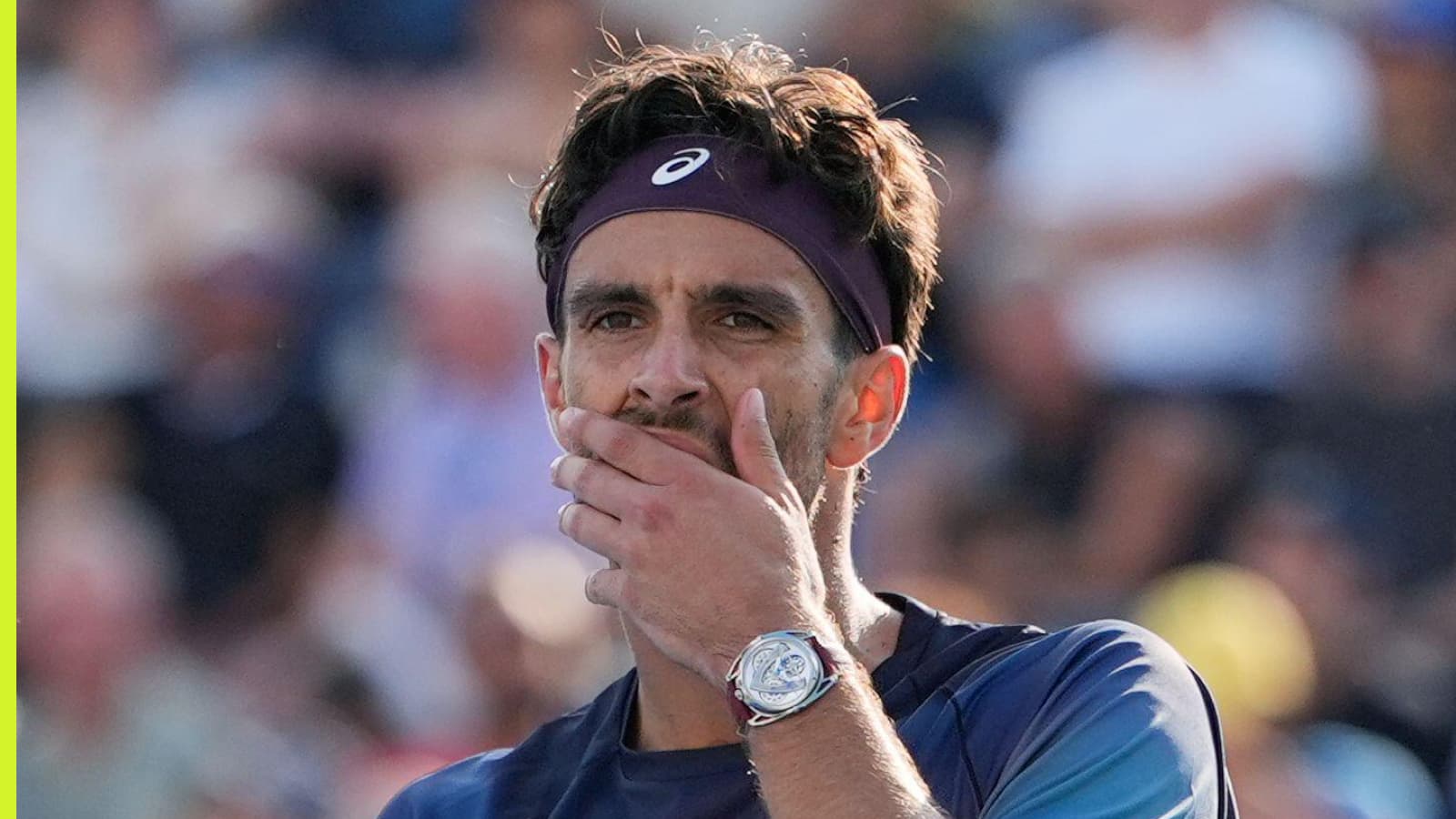
Lorenzo Musetti was forced to change his anti-doping whereabouts during his marathon three-set win over Luca Van Assche at the Lyon Open.
Musetti looked set to close out a straight-sets victory over the Frenchman in their quarter-final clash on Friday, with the Italian earning a match point in the second-set tiebreak.
However, the Frenchman held his nerve, roared back and took the second to set up an intriguing decider. By this point, the contest was entering the three-hour mark, which forced Musetti into evasive action.
According to commentator Rob Koenig, Musetti had to change his 1am anti-doping whereabouts slot as the encounter extended into the early hours of Saturday.
Lorenzo Musetti having to change his anti-doping whereabouts, mid match here in Lyon, on the 3-2, third set sit down. Never ever seen that. Sounded like his slot was 1am. Match with van Assche has been incredible quality…so far. 3h15 and still going!!
— Rob Koenig (@RobKoenigTennis) October 23, 2026
Koenig said he had never seen anything like it, while journalist Jose Morgado relayed that Musetti told ATP supervisor Rogerio Santos that he needed to use his phone, saying “I have my anti-doping alarm set for 1am.”
More ATP Tour News
Want more from Tennis365? Add us as a preferred source on Google to your favourites list for tennis coverage you can trust.
On social media, fans couldn’t believe that Musetti had to juggle this while trying to beat Van Assche, while others criticised just how slow the courts in Lyon were; hence the lengthy match.
World No 27 Musetti eventually went on to win the encounter in three hours and 33 minutes in a gruelling 7-6 (5), 6-7 (7), 6-4 victory to set up a semi-final with compatriot Flavio Cobolli on Saturday afternoon, giving him just over 12 hours to recover.
According to the International Tennis Integrity Agency, an independent body that sets out to safeguard professional tennis from doping, corruption and match-fixing, the ‘Whereabouts’ protocol is an essential tool in upholding a clean sport.
Players need to provide their daily whereabouts, which ensures the ITIA can operate a no-notice testing programme and ‘maintain the integrity’ of tennis.
It is a requirement of the World Anti-Doping Code and is seen as an ‘effective’ anti-doping programme. Three non-compliances, such as filing failures or missed tests, within 12 months may result in a sanction.
READ NEXT: Daniil Medvedev states if he can overtake Carlos Alcaraz and Jannik Sinner in the rankings now