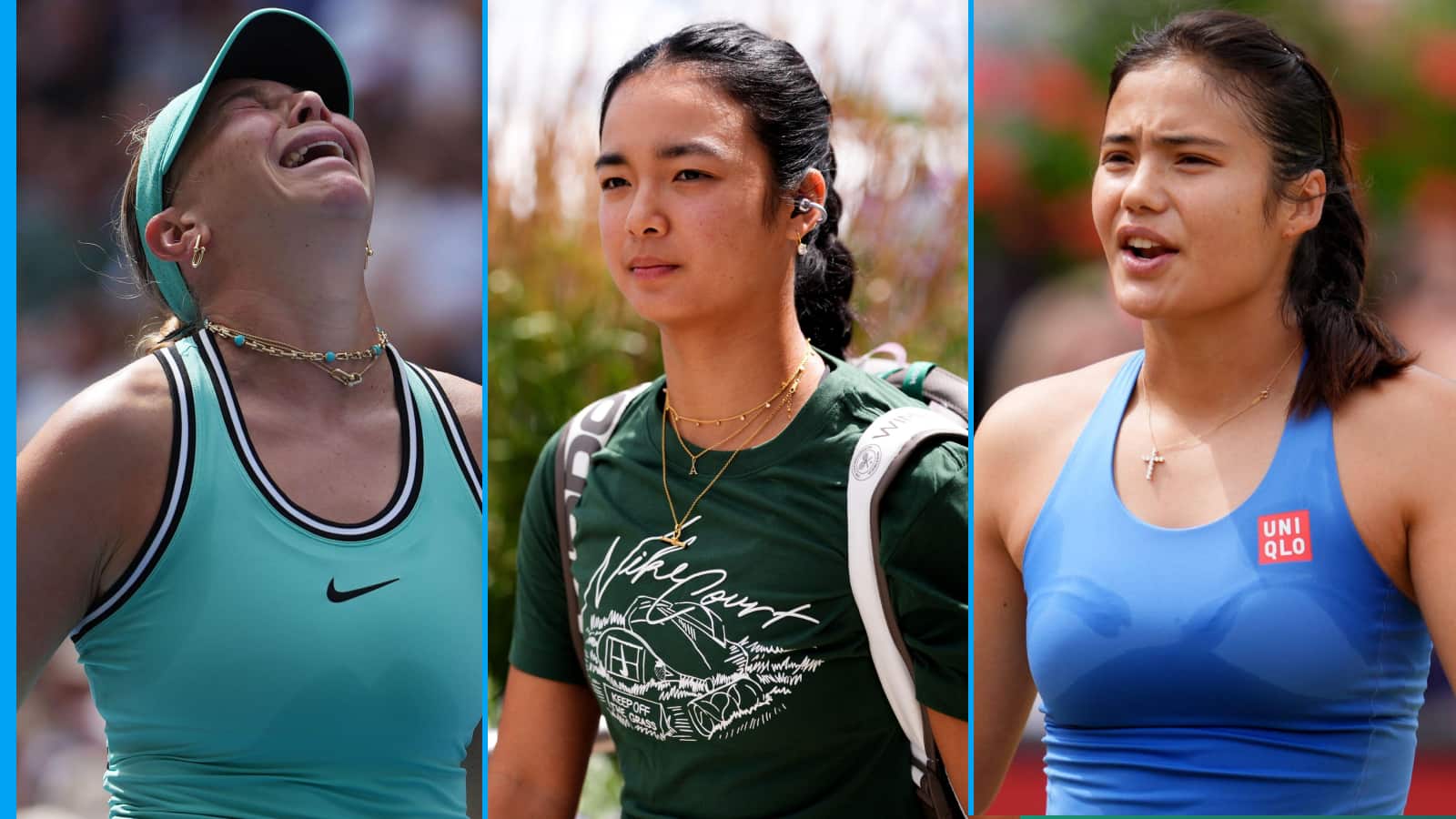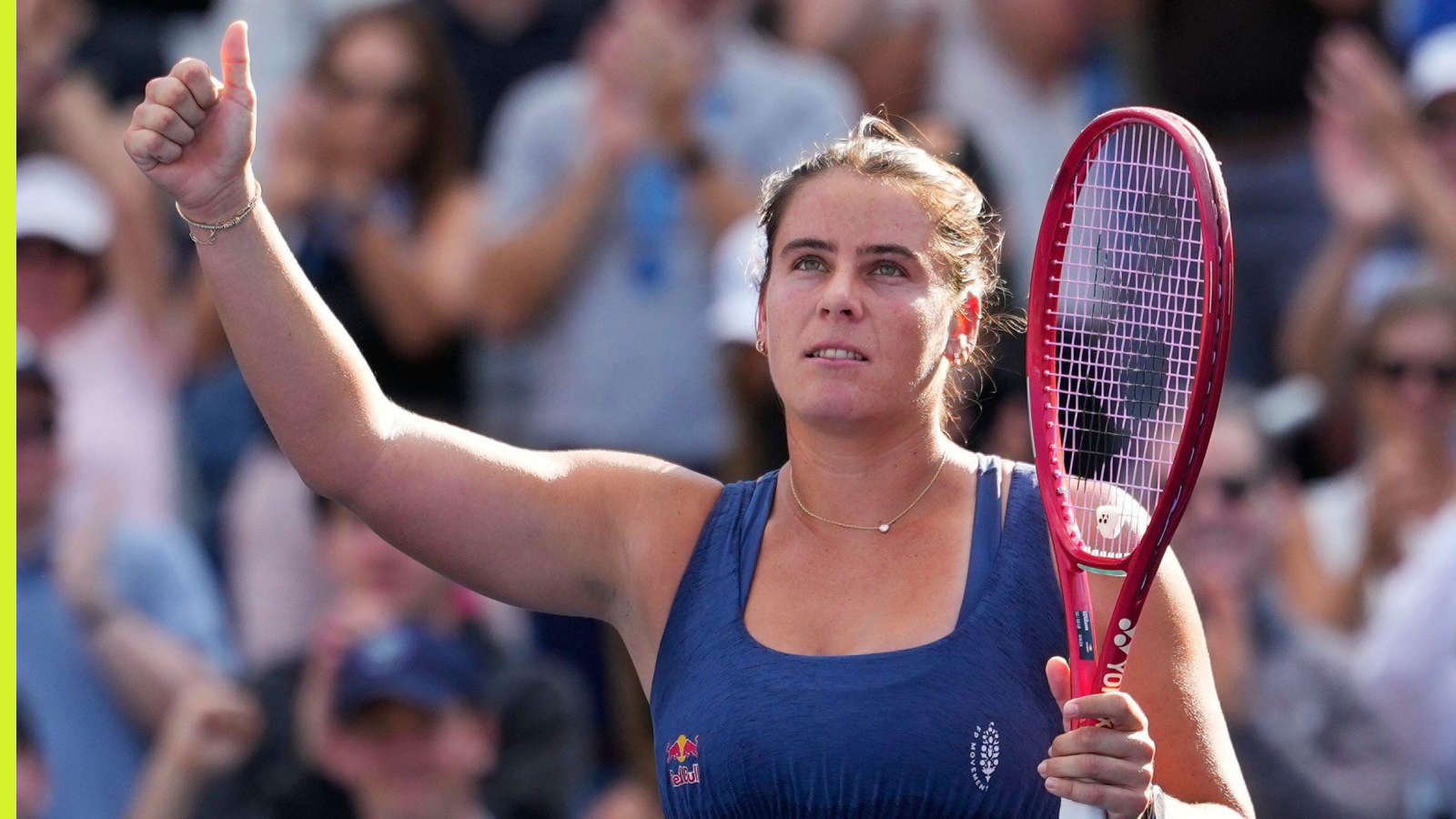
Emma Navarro announced she has ended her 2026 season early as she opened up on her battle with serious “health challenges” in a powerful and heartfelt statement.
The 25-year-old American star, a former world No 8 who is currently ranked 24th, finishes her campaign with a 25-20 win-loss record.
Navarro secured her third WTA Tour title at the clay-court 500 event in Strasbourg in May, and she was a runner-up at the grass-court 250 in Nottingham in June.
At her most recent tournament, Navarro made an impressive run to the US Open quarter-finals, where she fell in three sets to world No 3 Jessica Pegula.
Here is the full statement Navarro shared on her Instagram account.
As you all may know. I have faced some health challenges recently. What you probably don t know is that these challenges began almost three years ago and were heavily influenced by the choices I made early in my professional career relating to training, fuelling, competing and recovery.
I have been generally private about this topic while I worked to sort through the issues, but I feel that now is a good time to share a bit about what I have gone through as well as my vision for the remainder of the year.
In the fall of 2025, after struggling for several years to figure out a difficult and confusing array of symptoms, I was diagnosed with a condition known as RED-S (Relative Energy Deficiency in Sport), in which your body does not receive enough energy to support the demands of physical activity and daily life. This was further complicated by a diagnosis of Hashimoto’s hypothyroidism, which presented a challenging puzzle of energy intake, energy expenditure and medication to be solved. I feel compelled to share my story both out of respect for my loyal followers who have stuck with me through the highs and lows of the last year, and also in the hope that it will resonate with at least a few people who may be facing similar struggles.
In order to explain what led to my diagnosis, I need to go back to 2023 which was my first full year on the tour. In that year I played 88 matches. The most of any player in professional tennis. I was splitting my time between the ITF Circuit and WTA Tour, competing almost every week and training as hard as I could during off weeks.
Being new to professional tennis, I was doing what my team and I thought was best, and pushing myself to the limit was always my MO.
And it worked. I climbed from around 150 in the WTA rankings to almost 30 that year, winning four ITF titles and beginning to make deeper runs in tour events. I continued pushing in the off season of 2023 and then found quick success in January of the following year. I made the semi-finals of my first tournament of 2024, a 250 in Auckland, and won the 250 in Hobart the week after, shocking myself and my team. I then made third round of the Australian Open, my best Grand Slam result as of that date.
From the outside, things looked great. I continued to achieve tennis milestones that far exceeded my expectations, my ranking was rising, my level continued to improve, I continued to get faster and more athletic on the court, and I looked to be the strongest, fittest version of myself I had ever been.
But something was off. Or at least something was different.
Different isn’t necessarily bad, I thought. Maybe things have to be different. I guess this is what being a pro feels like.
But different wasn’t a fair explanation of what I was feeling. I was off. I was experiencing emotions I had never experienced before, at least not to this severity. Irritability, frustration, perfectionism, worry, and bizarrely for me, anger.
The only time I had ever felt true anger in my life was losing to my brother in ping pong when I was 11. But I remember feeling deep internal anger on the court that week in Hobart, like I wanted to smash every racket in my bag (something I had never done or wanted to do). Everything began to annoy me. My team, other people, anything that didn’t align with my specific preferences or routines, any imperfection on the court, every mistake, every point I lost. But I tried my hardest to not let people see how I felt, to keep it together.
More WTA Tour News
Want more from Tennis365? Add us as a preferred source on Google to your favourites list for tennis coverage you can trust.
Additionally, I was hungry. Every hour of the day, I was hungry. I had lost almost twenty pounds throughout 2023, and I thought I was doing what professional athletes are supposed to do. Getting lean to optimise performance.
My immune system was also weakening. I was getting sick far more than I ever had, but still playing through it. I went to Lleida for a WTA 125 after an early Madrid loss, got a bad case of food poisoning the day we arrived, and spent 48 hours sick in my hotel room before grinding my way through two matches and eventually withdrawing.
I had a pretty severe head cold at the Paris 125 that left me with headaches, brain fog, and hardly any energy, but I took some Tylenol and a cough drop and made a run to the finals. In the grass court swing, I began to have persistent headaches and bouts of dizziness.
I couldn’t think straight a lot of the time, and I had trouble remembering things and articulating thoughts. My brain felt slow and tired, as did my body. I had to be so careful about expending energy because I couldn’t afford to waste any. I had night after night of restless sleep, waking up just as tired as before. My skin began to show signs of weakness, developing rashes on my neck and scalp.
But while all this was happening, I was meeting success on continually bigger stages. I advanced to a round further in each consecutive Grand Slam throughout 2024. I competed in the Paris 2024 Olympics, making it to the third round. Incredibly, I finished the 2024 US Open as a semi-finalist ranked eight in the world.
I must be doing things right, I thought, otherwise I wouldn’t be having this success. Of course I feel tired and a little out of it. Every athlete struggles with this stuff. I can’t change what I’m doing now.
So I packed my bags and headed to Asia. I got sick the day after I got there, another head cold. I was a shell of myself. I was weak and exhausted. I remember laying on a lounge chair sleeping ten minutes before my first practice, too tired to warm up. A week or so later I tried to play my first match, but I couldn’t see the ball. I couldn’t move. I couldn’t play. I couldn’t even feel. That story remained the same over the next three weeks in China. I got sick again in Wuhan and knew I needed to go home.
I had lost another ten pounds over the course of 2024. Deep down, I knew I wasn’t healthy, but l had just had the year of my life. I chalked my experience in Asia up to just being tired after a long season, took two weeks off, and got back to work.
I trained harder than ever that pre-season. pushing myself in the gym and on the court. About three weeks in, my left quad began to give out. It was crampy and tight and weak, and I couldn’t load into it. Soon after that, I started to feel the symptoms I felt in Asia returning. I couldn’t move, I couldn’t see, I couldn’t complete exercises in the gym that I could have months earlier.
But I ignored the signs and got on a flight to Australia to begin the 2025 season. I was feeling the worst I had felt yet. Headaches, dizziness, brain fog, fatigue, anxiousness, mood swings, and like I was out of control and out of touch with myself and my body. I found myself in tears in the gym after practice in Melbourne, so confused about why I couldn’t play. Through pure grit and will, I made the quarter-finals of the Australian Open that year. That was the last bit of myself I had.
I struggled through the remainder of 2025, no longer able to drag myself through the day and switch it on for match time. I lost match after match and felt worse and worse. I was criticised for falling off, for not being the player I was before, for succumbing to the sophomore slump. But I knew these things weren’t true, so I kept trying to fix things by obsessing over the imperfections in my game. To no avail, of course.
I broke into tears on the court during my match at the September 2025 Billie Jean King Cup, devastated to be representing my country in this state of exhaustion and hunger and confusion, and not being able to properly honour our flag. I then tried to compete in China, but I was met with a similar story as the year before. I was hungry all throughout the day, dizzy and weak if I didn’t eat, and unable to sleep through the night without my body waking me up to eat. I went home that year and made it my mission to be transparent about my symptoms and fix whatever was going on.
In November 2025, after meeting with doctors and nutritionists and various specialists, we figured out that I had been under-fuelling for almost three years. My body was fighting back any way it knew how. It had been screaming at me for years, and I ignored it. After accepting the position I was in. I fully committed to recovering I knew the road ahead wasn’t going to be easy, but I was willing to do anything to feel like myself again.
So over the past year, I have gone all in. Changing my diet increasing my energy intake, blood draws. medicine prescriptions and tweaks, visiting different doctors, and nutritionists, monitoring blood sugar, logging symptoms, searching for patterns, etc. We worked to properly address a hypothyroid condition that had also worsened over time. And although it took a while to start feeling better, I gradually made progress. I began eating what my body needed to recover from the deficit I had been in. A few months in, I began sleeping through the night more consistently.
The dizziness faded. The headaches became fewer and farther between. Just a couple months ago, I started feeling more comfortable in the gym again with the ability to feel my body moving and my muscles working.
My mind slowly started to quiet down. My emotions calmed. My mental bandwidth expanded. My cognitive function improved. In the past few weeks, I felt able to play tennis as myself again, to see the ball moving, to move without thinking, to swing without cueing, to compete without it taking the life out of me.
So yeah, I gained some weight this year. But I also gained my life back. I have enough energy to seize every day, to train or compete as hard as I want to, and to live a life outside of tennis. To laugh, to be curious, to be spontaneous, to spend time with the people I care about, to feel joy, hope and positivity, and to appreciate the incredible gift of life. And I have learned that there is no weight on the scale or leanness in your limbs that is more valuable than your health or your well-being.
All that being said, I am taking the rest of this year to work on dialling in my medication and fuelling protocols so that I can hopefully feel back to 100% again. I will not be competing in Asia this year, but I plan to be back on the road starting in Australia 2027.